
Photography is being elevated with each new step in innovation. Technology opens up doors for new opportunities. With new technology readily available, photography is able to be manipulated in order to attain its goal. With the addition of Photoshop there are positive benefits for the public as well as negative. Animation and other industries employing this program are able to create new worlds and exploit imagination in order to successfully edit and design unheard of subjects. However, this usage becoming more and more mainstream adds to the negative downside of this program for its unrealistic expectations. Individuals, both male and female, utilize photography now for a status symbol in order to attain instant gratification for their successes. The negative feedback Photoshop brings in terms of a before and after photo alters the individuals perception of themselves. They soon become obsessed with the idea of how they look, but how they look to the world. It’s a crazy phenomenon to experience, nonetheless to watch happen around you. I believe if Photoshop wasn’t advertised as much as it is with editing photos and blurring flaws, the world would allow itself to have more self-respect. The people who feel they aren’t worthy enough to expose their perfect imperfections can finally see the beauty they offer. Although this may be the dream, photography is a growing industry and editing photos is along for the line. I see more and more programs being readily accessible as technology improves for individuals at home to edit their photos and send them out to the world. In an environment currently occupied by the idea of unrealistic expectations we are in for a rude awakening. I saw we take a look back at photography’s earliest investors and learn a few things about the simplicity of capturing a moment.
Tag: History



The Beginning of Photoshop
Photoshop was established in 1987. John and Thomas Knoll, the founders of this program, was working at the time with Industrial Magic and Light, the special effects branch for Lucasfilm. They derived this idea from Adobe Illustrator which was already established by Adobe. The Knoll brothers sold the program to Adobe and it blew up massively. Personal computers were running this program individually by the early 1990s. The software took off and photoshop became a more diverse industry allowing different fields to use it. For example these can include but aren’t limited to: publishing, medicine, film, web design, advertising, engineering, and architecture.
The Perfect Combo of Maddox and Bennet
Richard Maddox, an Englishman, sought to join the industry of photography in 1871 after the usage of collodion became public. Instead of repeating past steps, Maddox developed a method that allowed gelatin to be used instead. This idea was developed by Maddox, but edited and finally sent off into the world by Charles Bennet. Bennet discovered that the plates covered in gelatin were able to reach a relatively high sensitivity at 32 degrees Celsius. These gelatin and bromide mixture plates were able to be stored until used and then their exposure time exceeded no more than a second. This discovery by Bennet allotted for devices to make their way into cameras that could take in light at a rate of 1/100th or 1/1000th of a second. In 1880, the high sensitivity of these plates made the notion to evaluate this intensity a new beginning for the field of photography.
No More Paper for You
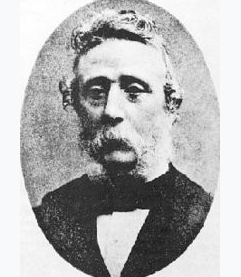
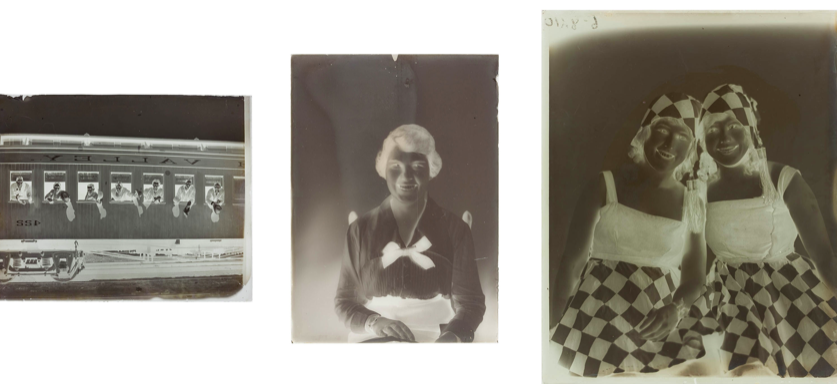
Abel Niépce de Saint-Victor had enough with the idea that photographs needed to be developed with the aid of paper. Instead in 1847 he devised a method where glass could be used instead. The new solution of Silver Bromide as discovered by Hippolyte Fizeau would adhere to the glass. Then, this solution would be mixed with albumen, otherwise known as egg whites. The images were much sharper than earlier in time forcing the industry to then consider developing lenses with higher definition capabilities.
Another man by the named of Scott Archer made new develops in this field of developing with glass. Instead of the new albumen solution, Archer utilized collodion as a new solution. Collodion has is considered to be the base of gun-cotton. The black and white images that developed because of this gun-cotton base were very high quality. Such quality was unheard of. The collodion unfortunately needed to be “humid” while on the plate and the process of developing must begin right after the exposure to light began.
The Ode to Sir John Frederick William Herschel
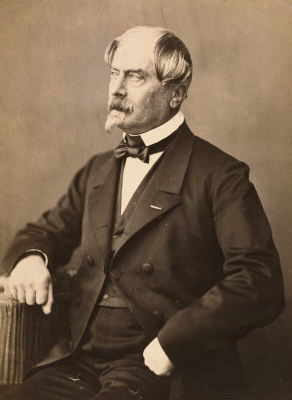
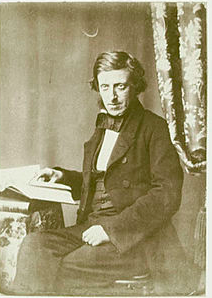
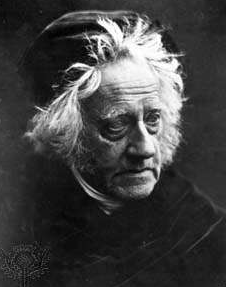
Photographic fix-baths are a method in which the image created can be corrected with the usage of a chemical solution. This solution can attributed to Sir John Frederick William Herschel. A well-renowned British astronomer, Herschel already made a name for himself when he discovered the planet Uranus in 1792 in England. His movement into the world of photography was well after his astronomy career and his very short career in law. In 1839, after the creation of the daguerrotype Herschel devised a way o fix photographs that plagued so many of his colleagues before him. His method involved dipping the images that were messed up into a sodium hypo sulfite bath. This “bath” is still used today in photographic-fix baths. Herschel after his discovery began writing more and more about the art of photography and even gave photography its name. Photography is derived from Greek words meaning “light” and “writing.” He was so amazed by the processes of developing photos that he even began to experiment in machines that would be able to develop photos. For example, in September of 1839, Herschel experimented with printing photos on glass and he was successful with doing so. His methods and passion for the topic are largely argued to have inspired many other pioneers who set to follow and hopefully surpass his footsteps.
The Continuation of Silver Chloride
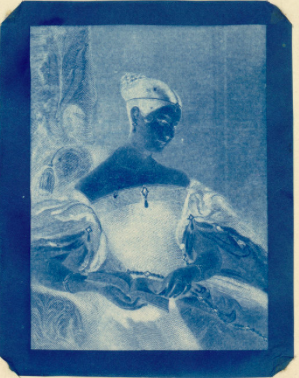
William Henry Fox Talbot began his pathway in photography in 1834. It wasn’t until 1839 when Jacques Mandé Daguerre created his daguerrotype that he began to take more of an interest in the subject. In 1841, Talbot contacted the patent office to have his prototype patented. He named it the calotype. The calotype was one of the first negative-process machines that permitted the copying of the same image multiple times. This was possible by having a translucid negative wax on the silver chloride paper. A second sheet of paper was then covered in the same silver chloride solution and when exposed to the translucid negative the final result was then developed.
The Introduction of Photos to Paper
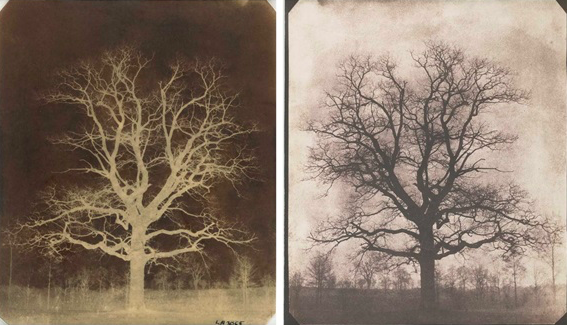
Skip ahead to 1839 and a man named Hippolyte Bayard (1801-1887) was next in line to create a useful technique for the technology behind photographs. Another Frenchman, amongst the many before him, Bayard devised a way to have images be placed directly on piece of paper. His process was relatively simple, a sheet of paper would be covered in a solution of silver chloride where it then would be blackened by light. After this, the paper is exposed to the camera device where a solution of silver iodide sensitizes the image. This exposure lasts roughly between 30 minutes to 2 hours. His friend, Jacques Mandé Daguerre, who invented the daguerrotype is known to have convinced Bayard to not submit his findings of his new inventive process of handling images. In 1840 however, he argued his case and this surge of passion for photography an be regarded as one of the first political-esque protests regarding the subject.
The corpse which you see here is that of M. Bayard, inventor of the process that has just been shown to you. As far as I know this indefatigable experimenter has been occupied for about three years with his discovery. The Government, which has been only too generous to Monsieur Daguerre, has said it can do nothing for Monsieur Bayard, and the poor wretch has drowned himself. Oh the vagaries of human life…!
Hippolyte Bayard (http://www.getty.edu/art/collection/artists/1840/hippolyte-bayard-french-1801-1887/)
The Student Becomes the Master
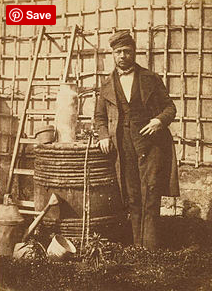
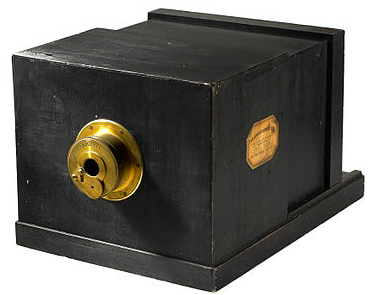
Unfortunately, Nicéphore Niépce passed away in 1833 and his partner in crime, Louis Jacques Mandé Daguerre invented his own prototype five years later in 1838. This “daguerreotype” had a very similar concept to that of Niépce’s. A silver plate would be exposed to the camera where then mercury vapors would interact with the silver iodide coating on the plate to lament the image on the plater after being exposed to light. This finding led Daguerre and many other members within this community to idealize this into the overall concept of light exposure. Daguerre’s prototype’s exposure to light took less than 30 minutes for the image to develop. After the final image is set he would touch it up with salt water.
The History Behind Photography: Nicéphore Niépce himself
A variety of different methods have been developed over the last two centuries photography has been around. In 1824, Nicéphore Niépce developed a machine that would project an image onto a silver plate after a few days of being exposed to light. After years of perfecting his concept, Niépce and his fellow colleague Jacques Mandé Daguerre in 1832 paired their current methods with lavender oil residue to quicken the process in which photographs would develop. Now instead of a few days, they were able to see the developed image in a matter of one day.
“I must now do three things: (1) give more sharpness to the representation of the subject; (2) transpose the colors; and (3) fix them permanently, which will not be the easiest of the three.”
Nicéphore Niépce, 1816 ( http://photoquotations.com/a/512/Joseph+Nicéphore+Niépce)

 Health-Ade Photography